


National Geographic 2000 February
Publisher: National Geographic
Format: Paperback
ISBN: none
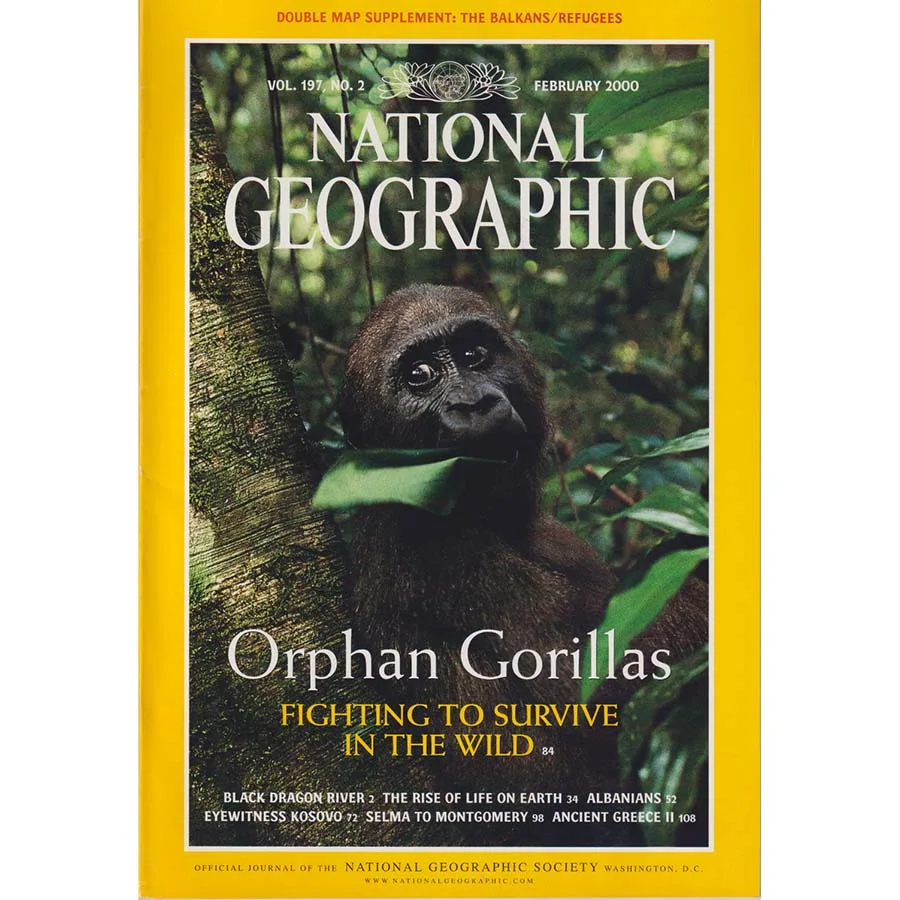
National Geographic – February 2000 is the moment the brand’s famous yellow border looks you dead in the eye and says: “Yes, it’s the dawn of a new millennium… and now, please meet this gorilla who has absolutely not been told about your millennium.” The cover is pure Nat Geo emotional engineering: one small face in a green blur of forest, radiating the kind of solemn, intelligent patience that makes you feel instantly guilty about every unnecessary purchase you’ve ever made.
Inside, you get that classic early-2000s National Geographic cocktail: tender wildlife intimacy, sweeping geopolitical context, and the comforting sensation that the world is both stunningly beautiful and complicated enough to require a fold-out map just to explain the headlines. It’s like a guided tour of Planet Earth led by a kindly professor who also occasionally whispers, “By the way, everything is on fire,” and then hands you a photograph so gorgeous you forget to breathe for a second.
The headline story—Orphan Gorillas: Fighting to Survive in the Wild—is the emotional centrepiece: big eyes, bigger stakes, and an implicit request that you care, preferably immediately, preferably forever. It’s that Nat Geo trick where you come for the wildlife and stay because you’ve formed an inconvenient bond with an animal you cannot legally adopt. Page after page has that glossy reverence: the forest isn’t just habitat, it’s cathedral; the gorillas aren’t “animals,” they’re “characters,” and you’re somehow the one being studied.
And then—because it’s February 2000—the issue pivots, without apology, to the world’s other kind of survival story: the human one. Included: a Balkans pullout poster, which is both genuinely useful and faintly hilarious in the way only National Geographic can be: “Here is a heartbreaking, intricate geopolitical situation… would you like it in a satisfying fold-out format?” Nothing says “serious global affairs” like a map you can dramatically unfold on the kitchen table while insisting you’re just quickly checking something.
This is the joy of these magazines as artefacts: they’re not only information, they’re mood. The fonts. The confident captions. The pre-phone-camera photography that looks like it took a week, a helicopter, and someone’s entire knee cartilage to capture. You can feel the era in it: the world is newly “global,” the internet is still mostly dial-up, and National Geographic is out here doing the longform, high-gloss version of “let me tell you what matters.”
Condition: Good, from Crappy Old Books—which is exactly right. A copy like this doesn’t need to be pristine; it needs to look like it’s been read, carried, opened flat for the map, and then kept because throwing it away felt morally questionable. If you want a single issue that can make you feel tender, informed, slightly overwhelmed, and weirdly hopeful—congratulations. The gorilla has already chosen you.
Keep browsing: See more National Geographic books Other books by National Geographic
